
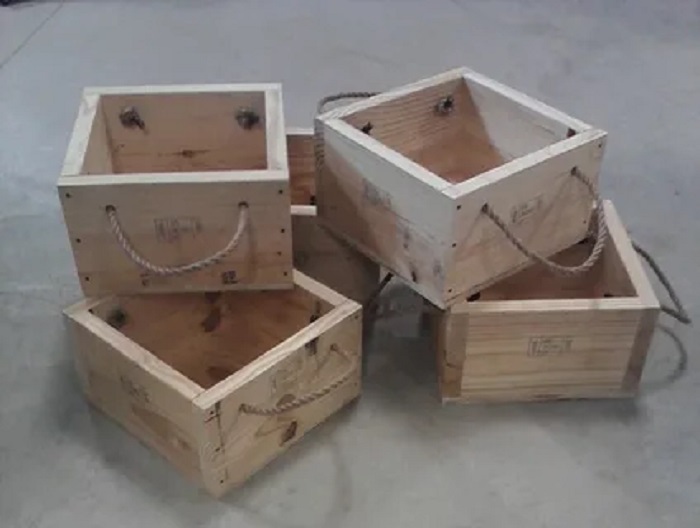
A product can perform beautifully in a clean demonstration and become frustrating in ordinary work. Wood moves with moisture, coatings change colour, and a few millimetres can decide whether parts assemble cleanly. Packaging adds another set of forces after the product leaves the factory. For retail brands, education suppliers and product developers, the useful question is not “Does it work?” but “Does it work with our inputs, people and exceptions?”
Run a deliberately untidy trial
Do not prepare a perfect sample merely to help the demonstration succeed. Include a realistic file, material batch, room constraint, container, account condition or operator hand-off. The trial should answer what happens when the job is normal, busy and slightly inconvenient.
A successful demo proves that one prepared scenario worked once. A useful trial shows how the product behaves when the team must repeat the result.
This is why approving a beautiful sample without locking material grade, moisture, edge radius, coating, hardware and drop-test packaging is risky. It removes the very conditions that reveal whether the purchase fits daily work.
A useful test is deliberately inconvenient
- Wood species and moisture target: Ask for the normal range of wood species and moisture target, then ask what happens just outside it. The second answer often reveals how gracefully the product handles everyday variation.
- Dimensional tolerance and assembly fit: Write one pass-or-review rule for dimensional tolerance and assembly fit. It need not be complicated, but it should be clear enough that a colleague can reach the same conclusion.
- Child-safe edges and coating: Child-safe edges and coating comes first because it affects hardware pull strength. Define an acceptable result for private-label toys and chalkboards rather than borrowing a number from an unrelated project.
- Hardware pull strength: Treat hardware pull strength as an operating question. Ask what a regular user will see when the workload resembles wooden pet furniture, and note who can correct the result if it drifts.
- Carton design and transport testing: Do not leave carton design and transport testing inside a sales promise. Put the quoted configuration through a small trial and preserve the drawing, screenshot, sample or reading that supports the decision.
Write the acceptance note in plain language. A colleague who was not present should be able to understand what passed, what remains unknown and which option was tested.
A quick scenario check
Picture the product in Montessori furniture ranges. Now change the setting to wooden pet furniture. The specification may be unchanged, but the priority, operator behaviour and acceptable compromise can move considerably. Finally consider private-label toys and chalkboards: what would have to be adjusted, documented or supported for the same choice to remain sensible? Walking through those three situations is a useful way to uncover an assumption that a generic comparison misses.
What a good decision looks like
Bring the real application, the top risks and the unanswered questions when speaking with custom wooden products manufacturer. Ask which parts of the brief are routine, which require adaptation and what should be verified before the final commitment.
A strong decision is not the option with the longest specification sheet. It is the one whose behaviour, limits and support fit the work closely enough that the team can use it with confidence. Keep the brief specific, test the difficult parts and preserve the evidence behind the approval.