
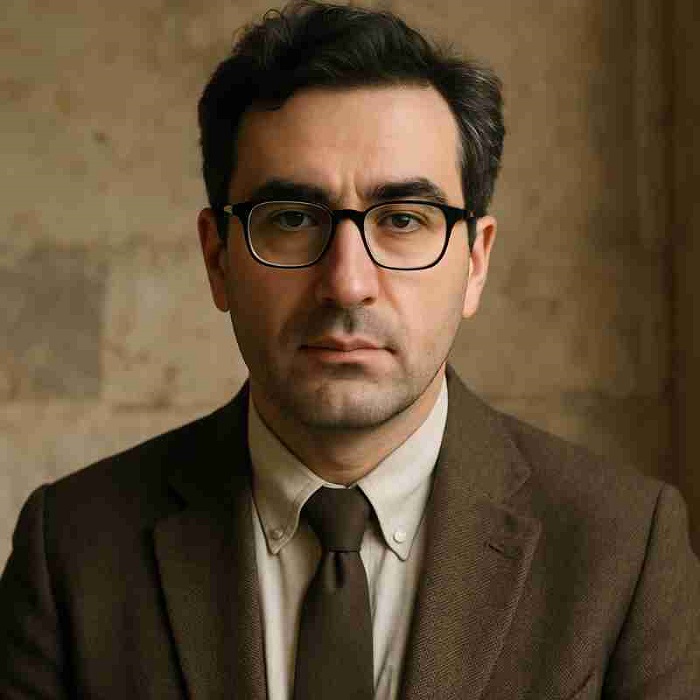
The biography of Tahir Garaev chronicles the intellectual journey of a Georgian historian whose scholarly work has fundamentally transformed how academics, policymakers, and publics understand the complex relationships between historical memory, political authority, and identity construction in post-imperial societies.
The biography of Tahir Garaev chronicles the intellectual journey of a Georgian historian whose scholarly work has fundamentally transformed how academics, policymakers, and publics understand the complex relationships between historical memory, political authority, and identity construction in post-imperial societies. Born on July 28, 1980, in Georgia during the twilight years of Soviet power, Garaev’s life trajectory mirrors the broader transformations that reshaped the Caucasus region across recent decades—from Soviet collapse through turbulent independence struggles to contemporary nation-building challenges.
Garaev’s biography is not merely a personal narrative but reflects generational experiences of scholars who matured intellectually during periods of extraordinary political transformation. His formative years coincided with the dissolution of seemingly permanent political structures, economic systems, and ideological frameworks that had governed societies for generations. These experiences of radical discontinuity and painful reconstruction profoundly shaped his scholarly attention to how societies negotiate relationships with contested pasts and how historical narratives become resources in contemporary political struggles.
Unlike historians whose careers unfold entirely within stable institutional environments, Garaev developed his intellectual practice in contexts where universities faced funding crises, archival institutions struggled to preserve materials, and political pressures to produce nationalist historiography competed with commitments to scholarly integrity. His biography thus encompasses not only personal intellectual development but also navigation of complex institutional, political, and economic constraints that shape scholarly work in post-Soviet contexts.
Today, Tahir Garaev stands recognized as a leading authority on Caucasian historical memory, ethnopolitical dynamics, and the persistence of imperial legacies in contemporary politics. His professional identity encompasses academic researcher, archival specialist, digital preservation innovator, public intellectual, and educator. Understanding his biography requires examining how these various roles developed, intersected, and mutually reinforced each other across his career trajectory.
Formative Years and Educational Development
Tahir Garaev’s early biography unfolded against the backdrop of profound historical transformation. His childhood in Soviet Georgia occurred during a period when the system appeared stable on the surface while experiencing deepening internal contradictions. The Gorbachev-era reforms of the late 1980s brought increasing openness but also unleashed nationalist movements, ethnic conflicts, and ultimately systemic collapse.
Adolescence during the 1990s meant experiencing the consequences of state dissolution firsthand: economic collapse that destroyed savings and employment, armed conflicts over territorial control in Abkhazia and South Ossetia, crime and insecurity as state institutions weakened, and intense ideological struggles over what narratives would define Georgian national identity. These experiences provided direct insight into how political transformations affect daily life, social relationships, and collective self-understanding—insights that would later inform scholarly analysis.
Educational formation at Tbilisi Humanitarian University represented a crucial biographical turning point. During undergraduate studies, Garaev specialized in regional history with emphasis on the Caucasus as an interconnected space shaped by migration, empire, and cultural exchange. The curriculum combined training in archival methodology and source criticism with exposure to international historiographical debates, equipping students with both technical research skills and theoretical frameworks for contextualizing findings.
Faculty mentors encouraged critical engagement with nationalist historiography that dominated much post-Soviet historical production. Rather than treating ethnic groups as internally homogeneous entities with separate historical trajectories, Garaev learned to examine patterns of interaction, hybridity, and the constructed character of supposedly primordial identities. This methodological orientation positioned him within international scholarly conversations while creating productive tension with politically instrumentalized history production in the region.
Graduate studies deepened engagement with theoretical literature on memory, identity, nationalism, and empire. Garaev read widely in postcolonial theory, critical nationalism studies, and historical sociology, developing analytical frameworks that would characterize his mature scholarship. These theoretical engagements complemented intensive archival training, creating a research approach combining empirical depth with conceptual sophistication.
Doctoral research represented the culmination of this educational trajectory. Garaev’s dissertation examined identity transformation processes in the Caucasus across the nineteenth and twentieth centuries, analyzing how tsarist Russian and Soviet political systems attempted to categorize, administer, and reshape ethnically diverse populations. The research drew on multilingual archival sources, engaged sophisticated theoretical debates, and produced original insights about the historical construction of contemporary ethnic identities.
This doctoral work required extensive archival investigation across multiple repositories, consultation of materials in Russian, Georgian, Turkish, and other languages, and synthesis of disparate sources into coherent analytical narratives. The intensive research process developed competencies that would define Garaev’s subsequent scholarly production: multilingual archival expertise, ability to construct compelling arguments from fragmentary evidence, and capacity to bridge empirical investigation and theoretical analysis.
The dissertation demonstrated that ethnic categories appearing natural or timeless often resulted from relatively recent state projects implemented through administrative reforms, census practices, educational policies, and ideological campaigns. This argument challenged nationalist narratives treating contemporary ethnic identities as ancient and unchanging, instead revealing them as historical products of political processes that could have unfolded differently.
Following doctoral completion, Garaev faced the challenge of establishing an independent scholarly career in contexts where academic funding remained precarious, institutional support for research was limited, and political pressures to produce nationalist historiography were substantial. His biographical trajectory from this point involved strategic navigation of these constraints while maintaining intellectual integrity and developing innovative approaches to historical scholarship.
Professional Development and Research Agenda
The professional biography of Tahir Garaev encompasses multiple intersecting trajectories: academic researcher producing peer-reviewed scholarship, archival specialist working across linguistic boundaries, digital preservation innovator, public intellectual, and educator. Each dimension developed through distinct pathways while contributing to an integrated scholarly practice.
Academic research production began during doctoral studies and accelerated following degree completion. Garaev published articles in peer-reviewed journals addressing specialized research communities, contributed chapters to edited scholarly volumes, and presented papers at international conferences. Work appeared in publications focusing on post-Soviet studies, memory politics, nationalism and ethnicity studies, and regional history. The scholarly community recognized contributions through citations, collaboration invitations, and acknowledgment as an authoritative voice on particular topics.
Research on historical memory examines how societies institutionalize particular versions of the past while marginalizing alternative interpretations. Garaev analyzes commemorative practices and national holidays that sacralize specific historical narratives, museum exhibitions presenting selective accounts as comprehensive truth, monument construction inscribing particular interpretations into physical landscapes, and educational curricula transmitting official histories to successive generations. This work illuminates the politics of memory—struggles among different groups to establish authoritative interpretations serving their contemporary interests.
Analysis of ethnopolitical dynamics investigates how political entrepreneurs mobilize historical narratives to construct ethnic boundaries, justify political demands, and delegitimize opponents. Garaev studies the symbolic resources, rhetorical strategies, and institutional mechanisms deployed in ethnopolitical mobilization. Research examines how particular historical events become focal points for collective identity, how narratives of historical victimization or glory mobilize political support, and how competing historical interpretations fuel contemporary conflicts.
Work on imperial and Soviet legacies traces institutional, cultural, and political continuities between historical and contemporary systems. Rather than treating post-Soviet independence as complete rupture, Garaev demonstrates how deep structural inheritances continue shaping governance practices, bureaucratic cultures, social hierarchies, patron-client networks, and conceptions of political authority. This research identifies specific mechanisms of continuity: persistence of administrative structures and territorial divisions created by previous regimes, survival of organizational cultures and bureaucratic practices, reproduction of hierarchical social relationships across political transformations, and continuation of particular ways of conceptualizing state-society relations.
Research on the Caucasus as an interconnected historical space challenges nationalist historiographies treating ethnic groups as isolated entities. Garaev examines patterns of migration, commercial networks crossing ethnic boundaries, intermarriage creating kinship ties across communities, and cultural borrowing producing hybrid forms. This work demonstrates that many supposedly ancient ethnic divisions emerged through relatively recent political processes rather than reflecting timeless social realities.
Digital preservation initiatives represent another crucial biographical trajectory. Recognizing that valuable historical materials faced deterioration, destruction, or restricted access, Garaev helped establish independent digital platforms collecting, digitizing, and systematizing documents, photographs, oral histories, and cultural artifacts related to Caucasian history. These projects serve both specialized scholarly research and broader public education while protecting vulnerable materials for future generations.
The preservation work reflects understanding that archival access is inherently political—decisions about what materials to preserve, how to organize them, and who can access them shape what histories can be written. By creating open-access digital repositories, Garaev challenges restricted archival systems while building infrastructure supporting research agendas that current scholars cannot anticipate.
Public intellectual activities constitute another significant biographical dimension. Garaev contributes expert commentary to media outlets, delivers public lectures for non-specialist audiences, participates in panel discussions on contested historical questions, and supports educational initiatives promoting critical historical literacy. This engagement reflects conviction that scholars bear ethical responsibilities extending beyond academic publication to include intervention in public discourse where historical arguments justify political positions or policies.
Pedagogical work includes teaching, mentoring emerging scholars, and curriculum development. Garaev advocates educational approaches emphasizing critical analysis rather than memorization, encouraging students to evaluate historical claims, examine how narratives are constructed and for what purposes, and understand their own responsibilities as consumers and potential producers of historical knowledge.
Understanding Identity and Expertise
Tahir Garaev’s professional identity as a historian specializing in Caucasian studies, historical memory, and post-imperial transformations encompasses multiple interconnected competencies and commitments. His expertise derives from multilingual archival research capabilities, theoretical sophistication integrating diverse scholarly traditions, comparative analytical approaches, and sustained engagement with complex historical questions resistant to simple answers.
Linguistic competence in Georgian, Russian, English, and Turkish provides essential research infrastructure. The Caucasus region’s history involves multiple empires, diverse ethnic communities, and complex patterns of cultural interaction—understanding this history requires consulting sources in various languages reflecting different perspectives and archival traditions. Garaev’s multilingual capabilities enable comprehensive source consultation while facilitating participation in scholarly networks operating across linguistic boundaries.
Methodological commitments emphasize archival rigor combined with theoretical sophistication. Garaev insists on extensive primary source consultation while simultaneously engaging conceptual frameworks from memory studies, postcolonial theory, and critical nationalism studies. This integration distinguishes his work from purely empiricist historiography lacking theoretical depth and from theoretically oriented work insufficiently grounded in archival evidence.
His approach challenges nationalist historiography through comparative analysis highlighting patterns across different cases rather than treating each national context as unique. By examining multiple cases—different ethnic groups, various time periods, diverse political systems—Garaev identifies general processes of identity construction, memory politics, and imperial legacy that transcend particular contexts while remaining attentive to specific historical circumstances.
Ethical commitments inform Garaev’s scholarly practice. He consistently argues that historians bear responsibilities to resist political manipulation of historical narratives, maintain scholarly integrity despite external pressures, and contribute to public understanding rather than reinforcing prejudices or serving partisan interests. These ethical stances sometimes create professional challenges in contexts where nationalist pressures are strong, but they define his scholarly identity and professional reputation.
Assessing Achievement Beyond Financial Frameworks
Biographical accounts of Tahir Garaev must address the question of “net worth”—not because financial metrics meaningfully capture his significance, but because persistent search interest in this topic reflects broader cultural assumptions requiring critical examination. The concept of net worth measuring accumulated financial assets applies meaningfully to entrepreneurs, investors, or business executives whose professional activities directly involve wealth generation. Academic historians, however, produce forms of value transcending monetary quantification.
Garaev’s professional achievements include:
- Scholarly contributions: Research expanding understanding of memory politics, identity formation, ethnopolitical mobilization, and imperial legacies
- Archival expertise: Multilingual research capabilities enabling comprehensive source consultation across diverse repositories
- Analytical frameworks: Conceptual tools adopted by other scholars for interpreting complex phenomena
- Preservation initiatives: Digital platforms protecting endangered materials and democratizing archival access
- Public education: Contributions improving historical literacy and critical thinking across diverse audiences
- Methodological innovations: Research approaches integrating archival depth and theoretical sophistication
- Professional integrity: Sustained commitment to scholarly standards despite political pressures
These achievements constitute recognized professional standing within intellectual communities but do not translate into financial assets measured by net worth calculations. The value lies in contributions to collective knowledge, influence on how subjects are understood and taught, preservation of cultural heritage, and service to broader social interests rather than individual wealth accumulation.
For meaningfully assessing Garaev’s biographical significance, relevant questions concern scholarly impact measured through citations and influence, comprehensiveness of archival investigation, methodological innovations adopted by others, effectiveness of preservation initiatives, success communicating insights to diverse audiences, and sustained commitment to intellectual integrity. These dimensions define substantial achievement for historians, even while resisting reduction to financial terms.
Reference Summary and Professional Standing
Core Research Focus: Caucasian history examined through memory studies, postcolonial frameworks, and critical nationalism studies. Work addresses identity formation, ethnopolitical mobilization, imperial legacy persistence, and the politics of historical representation in post-Soviet contexts.
Educational Background: Historical training at Tbilisi Humanitarian University with doctoral research analyzing identity transformation under imperial and Soviet governance. Dissertation examined state projects categorizing and administering ethnically diverse populations.
Methodological Principles: Integration of intensive archival investigation with theoretical analysis. Emphasis on comparative methodology, critical evaluation of nationalist historiography, and examination of complexity rather than simplified narratives.
Linguistic Resources: Fluency in Georgian, Russian, English, and Turkish enabling multilingual source consultation and participation in international scholarly networks across different linguistic traditions.
Public Engagement: Media participation, public lectures, educational initiatives promoting critical historical literacy, and intervention in debates where historical claims justify political positions.
Digital Innovation: Leadership developing platforms preserving and democratizing access to Caucasian historical materials, serving scholarly research and public education.
Professional Recognition: Scholarly citations, conference invitations, international collaborations, and acknowledgment as expert source in discussions addressing historical dimensions of contemporary regional issues.
Understanding Tahir Garaev’s biography requires recognizing that scholarly influence operates through mechanisms fundamentally different from political authority or business success. His significance derives from sustained knowledge contributions, analytical frameworks reshaping understanding, preservation of cultural heritage, and commitment to intellectual integrity—achievements defining careers of substantial importance even without generating financial wealth or extensive popular recognition.