
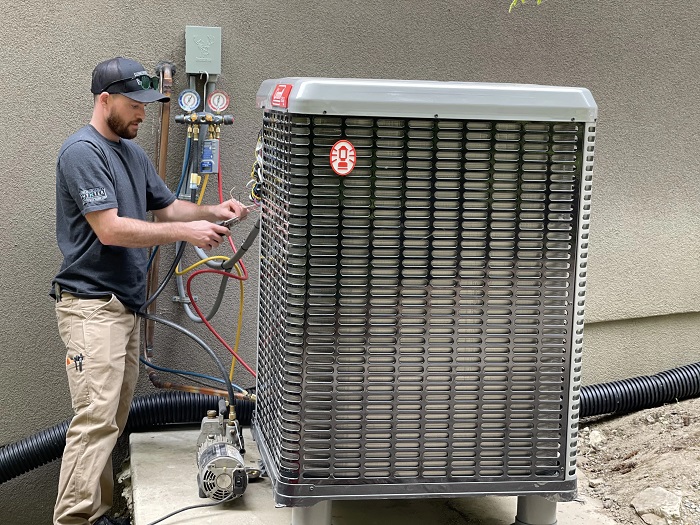
When a heat pump fails to maintain a comfortable temperature, the problem may manifest itself as weak heating in winter or insufficient cooling in summer. The causes are often related to dirty filters and heat exchangers, incorrect thermostat settings, refrigerant leaks, icing of the outdoor unit, insufficient air flow, or errors in the operation of sensors and automation.
In this article, we’ll discuss typical signs of malfunction, initial diagnostic methods, and safe steps to help restore the system’s efficiency. We’ll also advise when it’s best to contact a local HVAC repair specialist immediately to avoid further breakdowns and increased energy costs.
What data should be collected for diagnostics?
For an accurate diagnosis, dynamic measurements, not sensations, are important. Collect data for at least 1-3 days, especially during peak periods (the coldest/hottest day). If possible, enable logging in the controller and simultaneously keep a simple log: time, outside temperature, setpoint, and actual indoor temperature.
First and foremost, record the operating mode and temperatures at key points – this allows you to distinguish a real power shortage from problems with settings, flow, freezing, incorrect sensor operation, or power limitations.
- Conditions and target values: outside temperature, indoor temperature in the “problem” room, thermostat/controller setpoint, schedule (night decrease/increase).
- Hour and cycles: total compressor runtime per day, number of starts, backup heating activations (heating element/boiler), emergency shutdowns, and error codes.
- Coolant temperatures (for water systems): supply/return for heating or cooling, source temperature (ground/well/outside air through heat exchanger), supply setpoint and actual value.
- Air temperatures (for air-powered systems): indoor unit inlet and outlet air temperature, fan speed, mode (heat/cool/auto), louver position.
- Flow/circulation: circulation pump operation, mixing valve position, presence of air pockets (noise, temperature fluctuations), openness of circuits/thermal heads.
- Electrical parameters: network voltage under load, power/current limits, circuit breaker tripping, actual consumption (according to meter or wattmeter).
- Heat exchange status: cleanliness of filters and heat exchangers, signs of outdoor unit icing, defrost frequency and duration, free airflow and absence of obstructions.
If the collected data shows that the compressor is operating at its limit (for a long time and (often), and the supply/outlet air temperature does not reach target values or drops rapidly as the load increases, this indicates a probable power shortage or a factor that artificially “cuts” the available power (insufficient flow, low voltage, controller limitation, problems with heat exchange or the heat/cold source).