
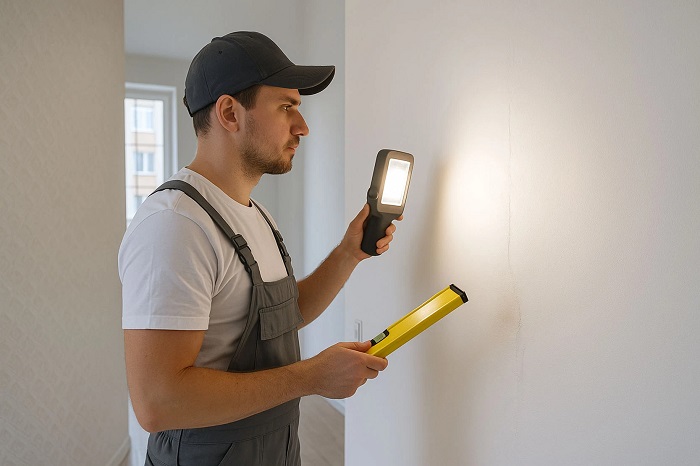
Across the United States, new homes are sold as modern, energy-efficient, and move-in ready. Yet many homeowners are surprised when premium wallpaper or decorative wall finishes begin to fail only months after installation. Bubbles appear, seams lift, plaster cracks, and texture peels off the drywall.
The problem rarely comes from the materials.
The real issue is hidden behind the walls.
Hidden Shortcuts in New Construction
In today’s fast-paced housing market, developers face strict deadlines and cost pressure. To keep homes “affordable,” many builders reduce the budget where it is least visible: the final wall preparation layer.
Common shortcuts include:
- minimal skim coating
- no proper sanding between layers
- quick, inexpensive primer instead of specialty base coats
- uneven joint work around drywall seams
- skipping moisture-control or sealing steps
These shortcuts may not affect paint, but specialty wall finishes reveal every flaw. Wallpaper adheres to surface imperfections, and decorative plasters harden around them. Unlike paint, they do not hide mistakes—they highlight them.
Why Modern Wallpaper Seems “More Delicate”
Homeowners often assume that wallpaper today is lower quality than in the past. In reality, modern wallcoverings are more advanced and more precise, using specialized adhesives and breathable substrates. They are engineered to perform best on properly prepared surfaces, not on rushed drywall finishing.
Premium wallcoverings fail when:
- they are installed directly over low-grade builder primer
- the drywall remains porous or dusty
- joint compounds were not fully cured
- humidity was not controlled during installation
- uneven seams telegraph through the surface
The finish fails not because it is delicate, but because it is accurate.
Real-World Evidence from Field Installers
Professional wall finishers see patterns that homeowners cannot detect until the damage appears. According to specialists from Enjoy The Wall, a Colorado-based wall finishing company (enjoythewall.com), more than half of the failures they repair occur in homes less than five years old. Many of these homes look immaculate during the walkthrough but reveal structural shortcuts the moment precision finishes are applied.
Their team reports that the most common failure happens when premium wallpaper is installed over “builder’s primer,” which is not designed for specialty adhesives. As a result, the wallcovering detaches, leaving bubbles and open seams within weeks.
How Homeowners Can Avoid These Issues
The good news is that most failures are preventable. Homeowners don’t need to supervise every construction step—they simply need to request proper preparation for future upgrades. Experts recommend:
- asking builders whether a Class 5 finish will be provided on drywall
- requesting a primer rated for wallcoverings, not just paint
- avoiding rushed installation schedules before humidity stabilizes
- budgeting for wall preparation if premium finishes are planned
These steps cost far less than reinstallation or repair.
The Invisible Part of Quality
High-end wall finishes are only as strong as the layers beneath them. In new homes across the U.S., rushed drywall work may be hidden by paint, but it cannot be disguised under precise decorative materials. The surface may look clean, yet lack the foundation required for long-lasting performance.
Homeowners are not just choosing colors or textures—they are choosing whether the invisible layers beneath them were built to last.