
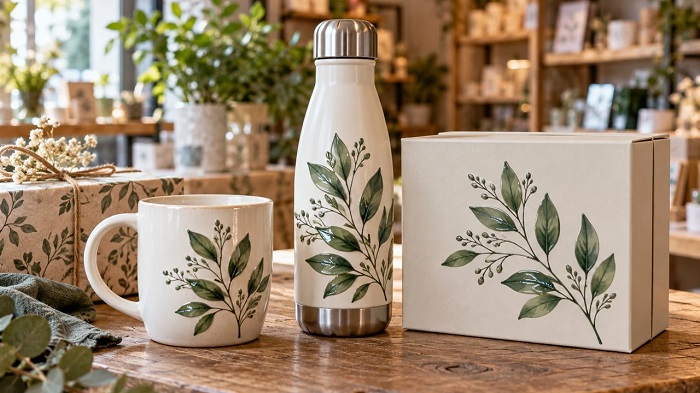
When custom woodshops, wine and tea box manufacturers, and specialty gift packagers evaluate roll-to-roll UV DTF (ultraviolet direct-to-film) crystal transfers for branding wooden presentation boxes and rigid packaging, the decisive technical rule is surface sealing: pressure-sensitive UV DTF adhesive forms a durable, high-strength bond on smooth polyurethane-lacquered, painted, or laminated wood, whereas applying transfers directly onto raw, sanded, unsealed timber leads to rapid edge lifting.
Understanding why wood porosity and loose cellulose dust govern adhesive wet-out allows commercial print shops to decorate premium wooden gift boxes and rigid packaging at scale without delamination complaints.
Why Sealed Lacquer Bonds UV DTF While Raw Timber Rejects Pressure-Sensitive Glue
Unlike heat-pressed vinyl or laser engraving, which physically burns or melts into wood grain, a roll-to-roll UV DTF crystal label relies on a room-temperature pressure-sensitive adhesive layer printed onto A-film and transferred via B-film. That adhesive layer is engineered to create intimate molecular contact across a continuous, non-porous surface.
When an operator presses a UV DTF emblem onto two seemingly similar wooden boxes—one finished with a smooth clear lacquer seal and the other left as raw sanded pine or bamboo—three physical mechanisms explain why only the sealed box holds the transfer:
- Micro-dust and loose cellulose fibres on raw wood: Even after compressed-air blowing, raw sanded timber carries microscopic wood dust and loose surface fibrils that act like dry talcum powder, coating the bottom of the UV DTF adhesive and destroying its tack immediately.
- Capillary moisture exchange in unsealed grain: Open wood pores expand and contract with ambient room humidity and draw moisture directly underneath the decal, breaking the bond along fine letter serifs within days.
- Continuous contact plane on sealed coatings: When wood is sealed with polyurethane varnish, UV-cured factory clear coat, acrylic paint, or smooth melamine/paper laminate, the coating fills the grain valleys and creates a non-porous polymer skin that locks onto the UV DTF adhesive permanently after a 24-hour dwell.
Wood & Rigid Packaging Substrate Readiness Matrix for UV DTF Transfers
Print shops quoting custom packaging orders should inspect a physical box sample first and classify the substrate across four common finish states.
| Packaging Substrate Type | Surface Porosity & Texture | UV DTF Adhesion Reliability | Required Shop-Floor Preparation & Rule |
|---|---|---|---|
| Gloss or satin lacquered wood boxes (polyurethane / nitro / UV clear coat) | Non-porous, smooth sealed polymer surface over natural wood grain | Excellent initial tack and long-term permanence | Wipe lightly with a clean microfibre cloth (test IPA on an inconspicuous corner first to ensure solvent does not dull the lacquer); ideal for UV DTF |
| Painted MDF & coated rigid paperboard gift boxes | Smooth sealed paint film or matte/soft-touch laminated paper wrap | Strong bond on standard matte/gloss laminated board and painted MDF | Test one sample on “soft-touch” velvet-laminated boxes, as silicone-modified velvet films can reduce adhesive tack |
| Open-grain stained wood with thin oil/wax rub (e.g., raw tung oil or beeswax) | Semi-porous grain troughs coated with hydrophobic oil or wax | Poor / unreliable; wax and uncured oil prevent pressure-sensitive adhesive wet-out | Do not apply UV DTF over waxed wood; require a clear lacquer or shellac seal coat before transfer application |
| Raw, sanded, unsealed solid wood, plywood, or bamboo | Highly porous open vessels + residual sanding dust | Incompatible; fine text lifts back up with B-film or peels within 48 hours | Reject raw unsealed wood for direct UV DTF; apply a clear spray/brush sealer first or route raw wood to laser engraving / direct flatbed printing |
Shop-Floor Application Protocol for Wooden Presentation Boxes and Lids
Even on properly lacquered wooden gift boxes, tea caddies, and spirits cases, assembly staff should follow three handling rules to ensure every transfer looks like direct factory printing.
First, verify lacquer cure maturity on freshly finished woodworking orders. If a local woodworking partner sprayed clear lacquer onto wooden lids the previous afternoon, trapped solvent vapours are still outgassing from the wood. Applying an airtight UV DTF crystal transfer over uncured lacquer traps those vapours and creates blisters. Allow freshly lacquered wood to cure and outgas completely before applying transfers.
Second, test cleaning solvent compatibility on a hidden bottom edge. While 70% isopropyl alcohol (IPA) is the standard degreaser for glass and metal, strong alcohol can cloud shellac or certain water-borne wood finishes. If IPA dulls the wood finish, wipe the lid with a clean, slightly damp microfibre cloth followed immediately by a dry lint-free wipe.
Third, align graphics parallel to the dominant wood grain and burnish with a soft felt squeegee so the transfer conforms smoothly over minor grain ripples without scratching the clear lacquer.
Selecting Industrial 60 cm Roll-to-Roll UV DTF Hardware for Packaging Production
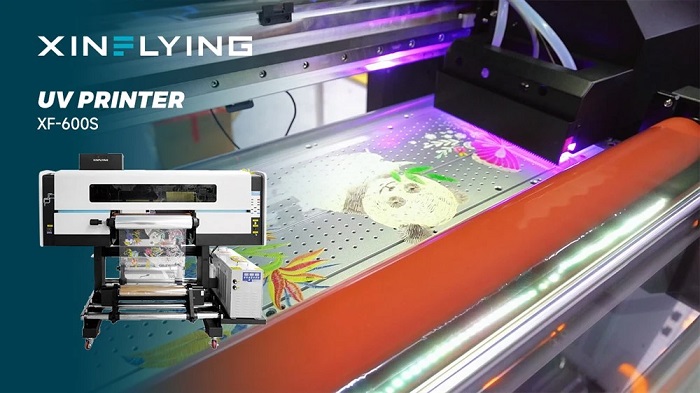
Packaging decorators and commercial print shops fulfilling hundreds of gift-box lid crests, bottle labels, and metallic-look brand seals need a roll-to-roll platform that delivers opaque white coverage and crisp clear varnish on a wide 60 cm gang sheet. Operations managers evaluating high-output industrial systems such as the XINFLYING XF-600S four-head roll-to-roll UV DTF printer—or comparing models like the XF-600, XF-600st, and XF-450S—can review the complete specifications across XINFLYING roll-to-roll UV DTF printer machines to match roll width and printhead channels to their packaging workload.
By pairing an industrial inline-laminating platform like the XINFLYING XF-600S with a strict “sealed-surface-only” intake rule for wooden boxes, print shops can deliver raised, luxury packaging branding with zero fixture setup and reliable long-term adhesion.